
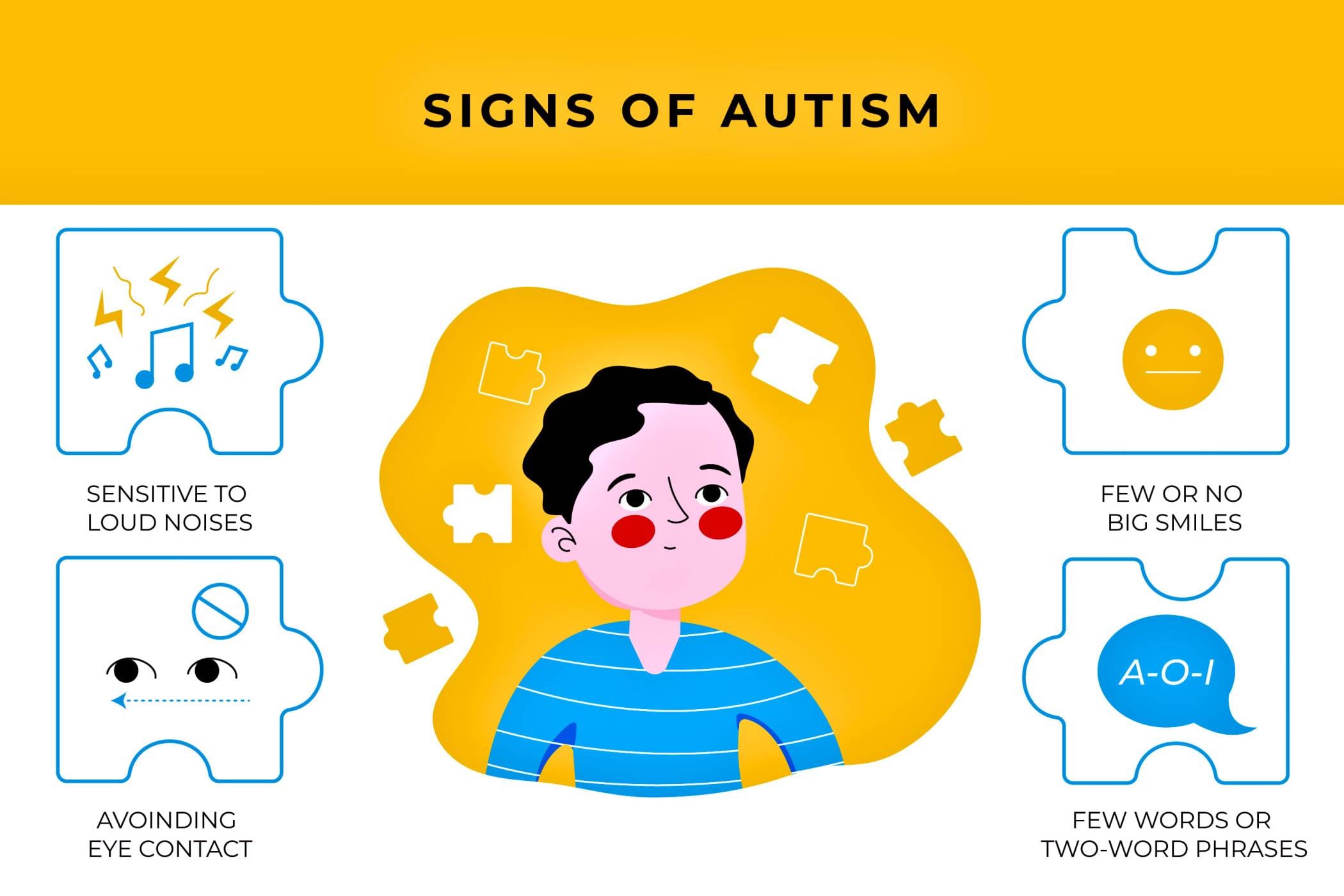
The “Sign language for Autism” varies among people diagnosed with Autism Spectrum Disorder (ASD). Since autism affects children as well as adults, the symptoms are generally noticeable when a child is between 18 to 36 months of age.
Autism is considered a mental developmental disorder as it is mostly found during the first two to three years of life. However, it is diagnosable in teenagers. Let me clarify: Autism is a lifelong disability. However, it can be managed at some point with the help of a combination of therapy and medication. You can get help from professionals such as applied behavior analysts or clinicians.
The question about “Sign language for Autism”
The parents remain worried about the activity of their child. These are common questions that parents search on Google, and you may be one of them. Often, parents want to confirm whether their child is autistic or not. Yes, they should not ignore any signs because early intervention is the most important thing in autism.
- Are teeth grinding a sign of autism?
- Is lining up objects a sign of autism?
- Is lining things up a sign of autism?
- Is drooling a sign of autism?
- Is zoning out a sign of autism?
- Is w sitting a sign of autism?
- Is lining up toys a sign of autism?
- Is hand leading a sign of autism?
- Is late teething a sign of autism?
- Is hoarding a sign of autism?
The parents remain worried about autism signs in their children. And the answer is: there is not a single sign. You have to look at the activities of your child to identify if your child is autistic. In this article, we have divided the signs into parts to help you understand better.
The common Sign Language for Autism:
Here is the common Sign Language for Autism as follows:

- Difficulty in communication.
- Developmental learning ability issues.
- Sensory issues with sounds, lights, touch, and tastes
- Difficulty communicating
- seizures
- Gastrointestinal symptoms, like constipation or diarrhoea
- Easily upset over petty changes
- Repetitive and restricted behaviours and movements
- Difficulty in participating in society.
- hyperactive, inattentive, or impulsive behaviors
- Irregular eating routines or preferences
- Extreme worry or focus
- Trouble with changes
- Unusual interests
- Difficulties in understanding or expressing emotions
- Recurring sleep problems
- Insufficient impulse control
Identify the Sign Language for Autism in children:
Here are the signs of autism in children as follows:
- They do not respond to calling their name
- They do not socialise with other children.
- Avoid eye contact
- Lack of fear or more fear than expected
- No response or smiling
- Repetitive movements like flicking their fingers, flapping their hands, or rocking their body
- Repeatedly speaking the same phrases
- Easily upset with a certain taste, smell, or sound
Identify the Sign Language for Autism in adults:
Here are the autism signs as follows:
- They might get upset when you ask them to do something.
- Problems with routine changes.
- Obsessive interests
- Unusual eating and sleeping habits
- Unusual mood or emotional reactions
- Not able to understand other people’s thinking or feelings.
- Anxiety, stress, or excessive worry
- They cannot express their feelings
- Very keen interest in certain subjects or activities
- They might get upset when you ask them to do something.
- Avoid socialising with friends and family.
Identify the signs of autism in women/girls.
Autism signs can sometimes be different in girls than in boys.
For example, an autistic girl may be more peaceful, or hide her feelings, and may appear to cope better in terms of social handling, at the same time boys are not.
Most autism signs are common in both women and men but there may be a few changes due to gender. The parents need to understand and identify the signs so that early intervention can occur. We are sure you got your answer.